
How to Reduce Conflict with Non-Violent Communication
Have you ever said, “You made me feel angry!” Once you understand the concepts behind Non-Violent Communication, you will realize that this statement is an indication of emotional immaturity. Other people can’t make you angry unless you let them.
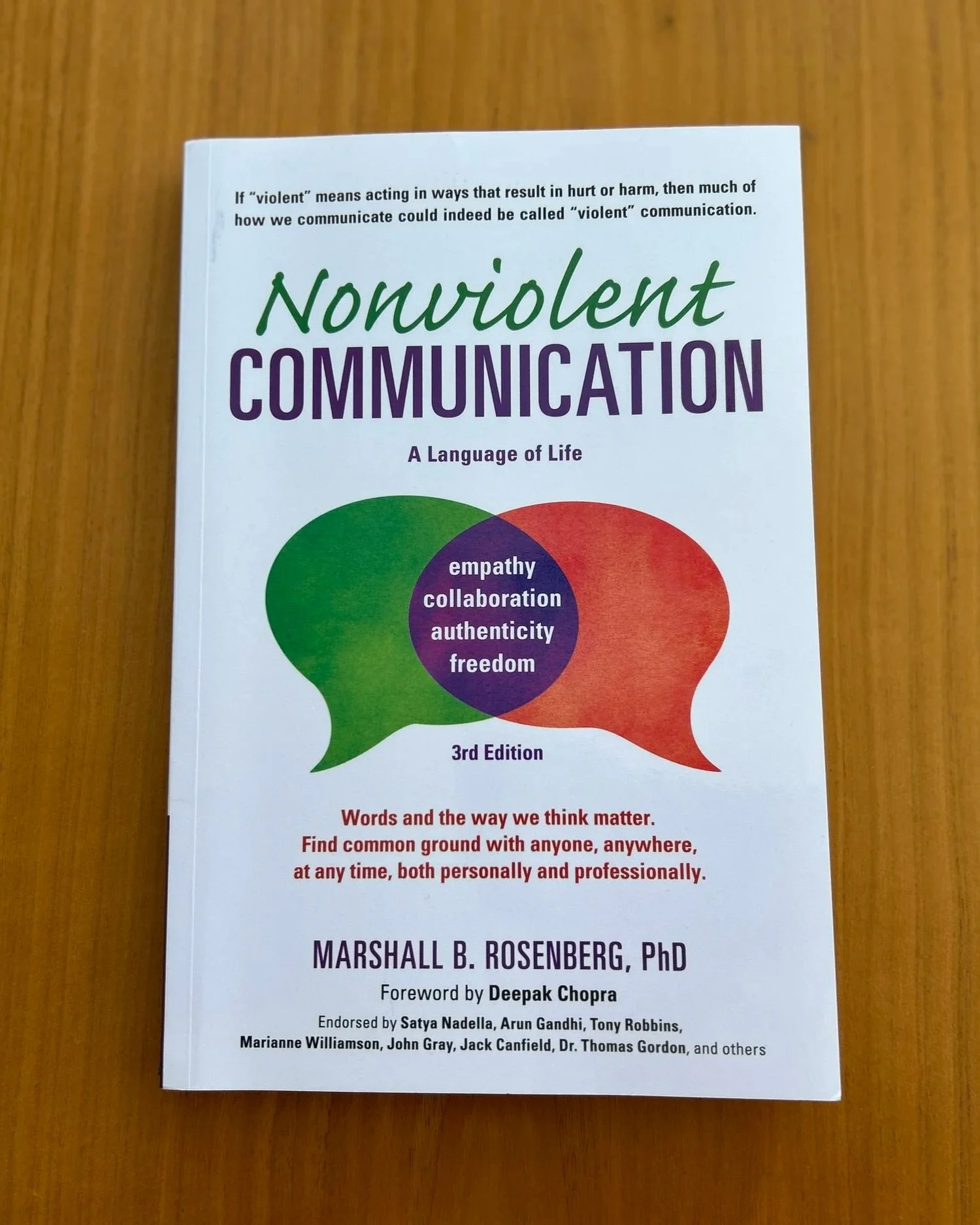
Dr. Marshall Rosenberg, Ph.D., founder of the Center for Non-Violent Communication, explains the stages of emotional maturity in his book Non-Violent Communication. An Inc. article explains that soon after Satya Nadella became CEO of Microsoft, he gave all his senior executives a copy of this book and made it required reading for them. This signified a turning point in both the corporate culture and company performance at Microsoft.
I love to read and have read more books than I can remember but Non-Violent Communication (NVC) is on my shortlist. I refer people to it far more often than Crucial Conversations, which is another book some of you might be familiar with, because of how practical the Non-Violent Communication framework is, especially when it comes to reducing conflict.
Importance of Establishing Healthy Emotional Boundaries to Manage Conflict
There is a pre-requisite for being able to practice non-violent communication effectively and that is taking responsibility for our feelings in order to establish healthy boundaries.
Dr. Henry Cloud literally wrote the book on Boundaries. In Changes that Heal, he writes:
Our feelings are our responsibility.
If other people feel sad, it is their sadness.
It does not mean that they do not need someone else to be with them in their sadness and to empathize with them.
It does mean the person who is feeling sad must take responsibility for that feeling.
Dr. Rosenberg explains that we have four choices when we receive a negative message: (1) blame ourselves, (2) blame others, (3) sense our own needs and feelings, (4) sense others’ needs and feelings. He outlines 3 different stages to reach emotional liberation. I like to call it emotional maturity instead of emotional liberation.
Stage 1: Emotional Immaturity – The Childhood Stage
Dr. Rosenberg calls this stage Emotional Slavery. It is when we think we are responsible for how others feel. Children are like this. They think the world revolves around them and even feel responsible when their parents get divorced.
Stage 2: Emotional Adolescence – The Teenager Stage
Dr. Rosenberg calls this stage the Obnoxious Stage when we don’t know how to not be responsible for others’ feelings without being obnoxious about it.
Stage 3: Emotional Maturity – The Adult Stage
Dr. Rosenberg calls this stage Emotional Liberation. In this stage we are able to take full responsibility for our intentions, actions, and emotions without casting blame on ourselves or others.
What the Non-Violent Communication framework does is help us shift from blaming ourselves or blaming others to first sensing our own feelings and needs in order to be able to convert that into a clear request instead of anger or frustration.
Non-Violent Communication Framework
There are four parts to the Non-Violent Communication process:
1. State your observation: “I noticed…” or “When you said/did…”
2. Explain how that made you feel: “I felt…” or “I became… because it felt…”
3. What was your unmet need: “because I need…” or “What I need is…”
4. Make a clear request: “In the future can you…” or “Would you be willing to…”
Typically, the hardest part of this process is uncovering what your unmet need was that caused you to feel a certain way. You may not be able to do this in the moment, especially at the beginning. In those situations, you can come back to that person in a timely manner for a follow-up conversation.
Here is a simple example. Imagine that one of your direct reports was looking at his phone a lot during an important in-person team meeting and that you felt annoyed by this. Here is what a non-violent communication conversation might look like with that employee.
“I noticed that you were on your phone a lot during the meeting. I was annoyed because this felt disrespectful to both me and the other team members. I need to have your full attention. In the future, can you please put away your phone when we are in a meeting?”
Best Practices for Managing Conflict
Here are a few best practices around managing conflict.
1. Speak up earlier rather than later to nip conflict in the bud. If you don’t say anything when you are annoyed and this recurs over time, it may become pent up frustration instead and turn into anger or resentment.
2. Try to deliver your message privately whenever possible. However, if you have done this and the other person is not receptive, you may need to bring in another party or make your needs and request known more publicly.
3. If you simply make the request without following the other steps, the person may acquiesce momentarily, but the chances are higher that he returns to this behavior because he does not understand why this request is significant to you. This becomes even more important in situations when the stakes are higher.
For more on conflict management, read How to Reduce Conflict with Paradoxical Leadership by Gloriana Teh, founder of Claritas Consulting & Coaching. Click this link to book a discovery call with Claritas or follow us on LinkedIn for more useful leadership resources and frameworks.
Recommended for further reading:
Atlas of the Heart by Brené Brown to build your emotional vocabulary and understanding around 87 different emotions.
If you found this useful, please share this article with others.