
The Power of Paradox: Paradoxical Leadership Comes of Age
What comes to mind when you think of the word paradox? Paradox has been showing up more and more recently, from Brené Brown's latest book to multiple articles including one in Forbes from Michael Hudson, CEO of Hudson Institute of Coaching.
Since COVID, there has been an uptick in interest around paradoxical leadership because it's become more challenging for leaders to:
· Maintain stable operations AND innovate at the same time
· Keep their teams motivated AND hold them accountable to delivering results
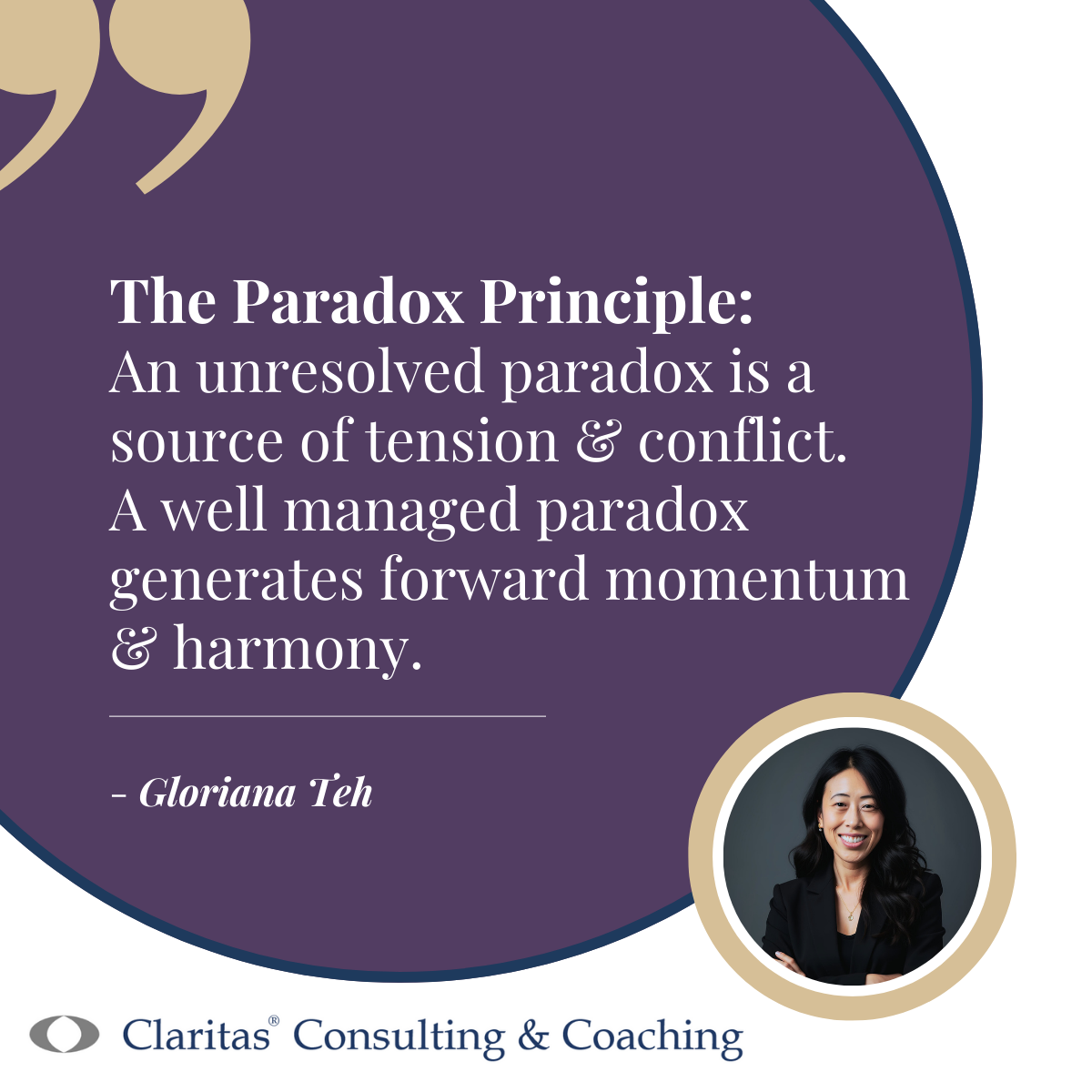
The Paradox Principle
· Stay optimistic AND evaluate potential risks
· Deliver short-term results AND longer-term strategic initiatives
These are all paradoxes and once you start noticing them, you'll see paradoxes everywhere you look, even when they aren't spelled out as such. Paradoxical leaders know how to identify and embrace these competing tensions to convert them into forward momentum. I call this the paradox principle:
An unresolved paradox is a source of tension and conflict.
A well-managed paradox generates alignment and forward momentum.
Why is paradoxical leadership necessary now?
For too long paradoxes were ignored but our lives have become so complex that we need to embrace them now more than ever. The beauty of paradox is that once you understand and adopt a paradoxical mindset, it allows you to simplify, but not over-simplify, the complex. I'm glad that we are finally realizing the importance of paradoxical thinking.
Good leaders have already embraced paradoxical leadership skills. Situational leadership and servant leadership are both subsets of paradoxical leadership. Situational leadership is the ability to adapt one’s leadership style to be both directive AND supportive as necessary. The paradox in servant leadership is the willingness to serve your team AND lead with confidence.
What’s lagging is that we haven’t widely adopted the language for it. Language is important. Consider the terms emotional intelligence or psychological safety. Before these terms became mainstream thanks to Dr. Daniel Goleman and Dr. Amy Edmundson, it was hard to pinpoint or explain what made some leaders more successful than others (emotional intelligence) or what differentiated high-performing teams from other teams (psychological safety).
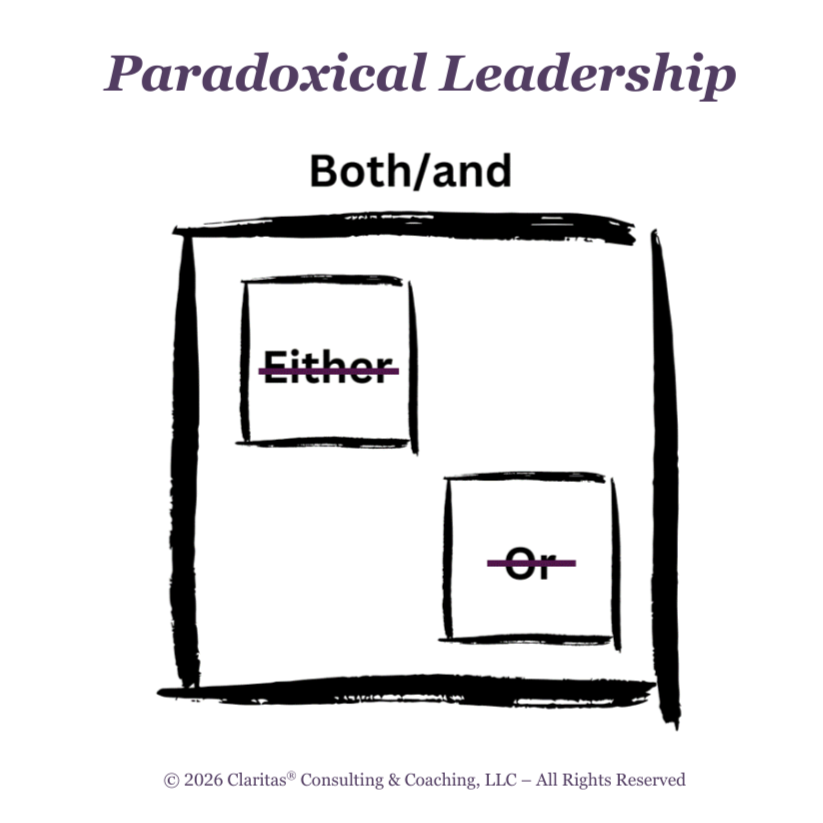
Paradoxical Leadership Both/And Thinking
Dr. Marianne Lewis is one of the leading experts in the field of organizational paradoxes as they relate to leadership and innovation. She shared that she was dissuaded by her advisors from selecting paradox as the research topic for her dissertation. And decades later, when she and Dr. Wendy Smith wanted to write a book on the topic, they were told to title it something else instead, so the book title is Both/And Thinking: Embracing Creative Tensions to Solve Your Toughest Problems. The word paradox frequently throughout the entire book but not in the title.
Now their Harvard Business Review article, “Both/And Leadership” is on HBR’s 10 Must Reads on Leadership (2025) and their book won the Thinkers50 Best New Management Booklist (2023).
What are the benefits of paradoxical leadership?
1. Paradoxical leadership behaviors provide an advantage when it comes to innovation.
A meta-analysis by Lee, et. al. (Frontiers, 2023) shows that paradoxical leadership behaviors exhibit incremental predictive validity (R2 = 26-75%) over other leaderships styles (transformational, transactional, & servant leadership).

Meta-analysis by Lee, et. al. (Frontiers, 2023)
2. Paradoxical leaders empower their teams towards better solutions instead of simply accepting compromises.
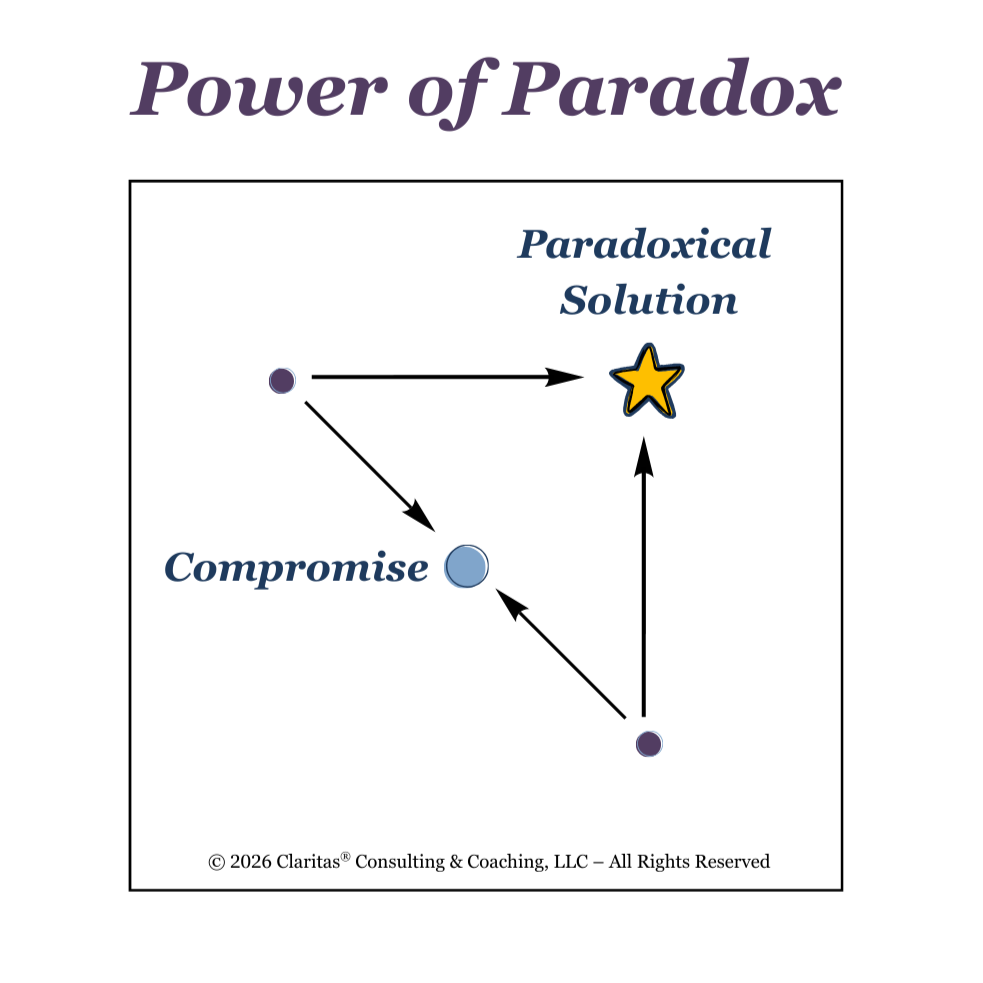
Power of Paradox vs. Compromise
One of the best examples of a company that has been able to come up with better solutions is SpaceX. Gwynne Shotwell, President and COO of SpaceX, is one of most powerful women in the world and a great example of a paradoxical leader. Not only is she a bonafide rocket scientist herself, but she is also amazing at sales, securing funding before SpaceX had even demonstrated a successful launch (attempt #4). She leads a team of over 13,000 people at the cutting edge of innovation.
In this interview with the Stanford University Graduate School of Business, when asked about her leadership style, she explained that she is a very collaborative leader. She likes to get other people’s input but is not afraid to make a decision. This is a paradoxical trait Dr. Dan Harrison calls collaborative accountability.
What are some paradoxes I need to be aware of to build paradoxical leadership skills?
The first step to any change is awareness. Being able to spot a paradox is the first necessary step in managing the competing tension it may create.
Here are twelve sets of paradoxes that Dr. Dan Harrison has identified. There are many other paradoxes besides these but as you become more and more familiar with these twelve, it will be easier to spot others. For each paradox, there is a link to an article that explains how to navigate that particular paradox.
Paradox Behavior Traits
Adaptive efficiency Organized & Flexible
Mindful Courage Risking & Analyzes Pitfalls
Respectful Candor Frank & Dipomatic
Instinctive Logic Analytical & Intuitive
Compassionate Enforcing Warmth/empathy & Enforcing
Sustained Results Self-Motivated & Stress Management
Insightful Curiosity Open/Reflective & Certain
Focused Innovation Experimenting & Persistent
Equity Mindset Helpful & Assertive
Collaborative Accountability Authoritative & Collaborative
Self-actualization Self-improvement & Self-acceptance
Vigilant Resilience Optimism & Analyzes Pitfalls
When both paradoxical traits are strong, it becomes a true strength for the individual or team. When there is a large imbalance between the two traits, this is often where potential misunderstandings and conflict arise.
Leveraging Harrison Assessments’ Paradox report is an effective way of developing paradoxical leadership skills. As a certified Harrison Assessments solutions provider, Claritas® Consulting & Coaching will equip you to use this report both for yourself and with your team to build stronger teams.
If you are ready to lead paradoxically, contact Claritas. We'd be glad to show you what next steps you can take.